Ceiling Light and Chandelier Setup Orange County
Orange County homes and organizations are not cookie cutter. A 1920s Craftsman in Santa Ana, a seaside apartment in Dana Point, a new integrate in Irvine, and a dining establishment in Anaheim all ask different things of a light fixture. I have actually hung crystal chandeliers the weight of a beach cruiser and switched dozens of flush installs in tract homes where the attic clearance barely fits a person on elbows. Great lighting is part art, part engineering. The space, the ceiling structure, the wiring, the controls, and California energy guidelines all enter play.
This guide walks through how a knowledgeable Orange County electrician approaches ceiling light and chandelier installation, the judgment calls that shape a tidy outcome, and when an electrical panel upgrade or troubleshooting becomes part of the story. Whether you are a homeowner looking for an electrical contractor near me in Orange County or a centers manager planning a tenant enhancement, the principles are the very same: support the weight, secure the circuitry, size the controls, and leave headroom for people and for code.
What makes Orange County installs different
Climate is the very first distinction. Residences near the water handle salt air, so we choose components and fasteners that resist rust. Inland neighborhoods see bigger temperature level swings in attics, so wirenuts, insulation, and LED motorists that deal with heat deserve the couple of additional dollars. Orange County's cities also use California Title 24 energy standards, which affect dimmers, vacancy sensors, and LED efficacy. If you have old halogen pendants over a kitchen area island, any replacement strategy ought to budget plan for suitable dimmers or clever switches that meet the existing code.
Ceiling types vary commonly here. Many midcentury homes have lath and plaster ceilings that do not forgive heavy-handed demonstration. Vaulted ceilings appear in Mission Viejo and Rancho Santa Margarita where a basic ladder will not reach, so we plan for scaffolding or a lift. Older condos in Laguna Woods sometimes conceal junction boxes behind drywall spots from previous remodels, which ends up being an electrical troubleshooting job before the very first screw goes in. I have likewise come across aluminum branch circuits in a handful of 60s structures that require CO/ALR rated terminations or copper pigtailing. These information change how we hang a chandelier and how we price the work.
Safety and code, the unglamorous backbone
A chandelier can be art, however the box that holds it is science. The National Electrical Code and the California Electrical Code require that ceiling-suspended fixtures are supported by a listed outlet box or fitting that can handle the weight. A common plastic or stamped steel box is usually listed for up to 50 pounds. Many chandeliers surpass that. Anything near or over that number requires a durable brace that spans joists or a fan-rated box, even if no fan will be installed. For very heavy components, through-bolting into structure and including a security cable television is regular practice. In older homes, joists are not always where the design desires the centerline, so we use a fan brace or include obstructing and spot the ceiling to keep the component centered without depending on plaster alone.
Height and clearance matter. Over a table, 30 to 34 inches from tabletop to the bottom of the chandelier is a typical sweet spot, adjusted by ceiling height and fixture diameter. In an entry, I aim for a minimum of 7 feet of headroom under the lowest crystal or finial. Over a bath tub, you can not put a hanging component within 8 feet vertically from the rim unless it is noted for moist and set up to code clearances. Those are guidelines I do not flex, even if the style board states otherwise.
On the circuitry side, 15 amp lighting circuits normally utilize 14 gauge copper. New operate in habitable spaces needs AFCI security. Bathrooms and garages need GFCI on receptacles, and while that does not straight impact a ceiling light, you will see it throughout the electrical examination when an Orange County electrical contractor pulls a license for a larger remodel. I like to examine box fill, due to the fact that a box packed with 12 conductors and a dozen wirenuts can get too hot. The code has a formula, but the practical rule is simple: if package looks like a container of snakes, upsize it. If you prepare an entire home rewiring in Orange County, ceiling fixtures are a good minute to rationalize circuit design and get rid of multiwire branch circuits that puzzle everybody 10 years later.
Structurally sound installs, with examples from the field
A couple of years back in Newport Beach, we installed a 48 inch tiered chandelier over a table with a glass top. The structure above the drywall was a web of trusses with no joist straight over the center of the space. The initial contractor had hung a 6 pound drum shade from a single gang plastic box. The brand-new component weighed 62 pounds out of the cage, 70 with crystals. We opened a careful 8 by 8 inch gain access to, installed a durable adjustable brace that locked into two truss members, then closed with a plaster spot. The component now rests on hardware that does not care if the table gets bumped or the door slams. You can not see the work, and that is the point.
In a 1960s Costa Mesa home with lath and plaster, we pulled down a flush install and discovered the box drifting in crumbly plaster with absolutely no support. Even a 20 pound pendant would have been a threat. The ceiling had no attic gain access to. We used a low-profile in-ceiling brace that inserts through a 4 inch opening and expands behind the lath without breaking it. It took longer than a new drywall job, but it preserved the initial look of the space. That trade-off - speed versus preservation - is common throughout Orange County's older neighborhoods.
Vaulted ceilings provide their own puzzles. In Laguna Niguel, a client wanted 3 pendants on a 12:12 pitch roofline. Basic canopies looked uneven versus the slope. We sourced sloped ceiling adapters that matched the finish, routed the cords to hang plumb, and set dimmers ranked for LED drivers to avoid flicker. The result looked uncomplicated. It took three website check outs to get the geometry and the light levels right. That type of staging is normal for a property electrician in Orange County who does this work often.
Assembly, dimming, and the small parts that make big differences
Many chandeliers arrive in 50 or more pieces. Crystal hairs, finials, stems, and tiny set screws have a method of rolling under couches. On an exact same day electrical expert call where we are swapping one light, we will preassemble on a padded table and tape the arms during lift to avoid chips. On large components, I prefer partial assembly on the ground, hang the frame, then end up crystals in the air with 2 people on the platform. That minimizes stress on the canopy and the threaded stem.
The 2nd hidden battle is dimming. LED chandeliers and pendants do not all play perfectly with legacy dimmers. A $12 triac dimmer can produce shimmer at low levels or leave near off. I keep a short list of dimmers that work well with common drivers, and I test on a short-lived pigtail before we finish the ceiling. For commercial jobs in Orange County, 0 to 10 volt dimming appears typically, particularly in dining establishments and offices. That calls for low voltage wiring from the control to the motorist and clear labeling in the panel schedule. Mixing line voltage dimmers and 0 to 10 volt circuits is a dish for a callback.
If you are going the clever path, Title 24 allows compliant clever switches that can run job or dimming functions. I have actually set up Lutron Caséta, RadioRA, and a couple of Z-Wave options in seaside homes where the Wi‑Fi coverage had dead spots. Smart home electrical wiring in Orange County usually take advantage of hardwired bridges, neutral conductors in every switch box, and a little additional depth in the wall boxes to manage modules. A regional electrician in Orange County who comprehends both lighting setup and networking conserves you grief later.
When a ceiling light exposes larger electrical needs
Ceiling light work frequently reveals larger problems. We pull a flush install and discover a brittle cloth-insulated cable television from the 1940s, or we see swelter marks from a loose wirenut. If you smell fishy odor from melamine insulation or see char on a neutral, that circuit needs more than a new component. We might recommend an Orange County electrical repair to replace an area of cable, include a junction box in an accessible attic, or reterminate aluminum electrical wiring with appropriate Al/Cu ranked connectors.
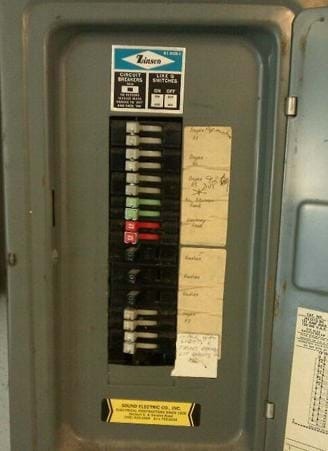
Occasionally the lighting upgrade presses a panel over the edge. One Irvine home combined a kitchen remodel, an EV battery charger installation in Orange County, and new outside lighting. The initial 100 amp panel had no room, and the service conductors were undersized. We finished an electrical panel upgrade in Orange County to 200 amps, handled the authorization and utility coordination, and after that completed the lighting. Trying to squeeze modern loads into a classic panel welcomes nuisance trips. Panel replacement in Orange County is not attractive, however it is fundamental, specifically if you are adding a generator interlock or battery backup later.
On industrial sites, including a chandelier to a lobby sometimes sets off availability and egress factors to consider. You can not let a component encroach on the minimum headroom of an exit path. Ornamental pendants in coffee shops need to clear sprinkler heads and not interfere with signage. An industrial electrical contractor in Orange County looks beyond the lovely image and checks the reflected ceiling plan, fire sprinkler drawings, and dimming zone diagrams before drilling a single hole.
Cost, scheduling, and what an expert go to must include
Pricing ranges swing since conditions are hidden until we open the ceiling. An easy swap of a ceiling light on an available box can land in the low hundreds, especially if we are currently on website for outlet installation in Orange County or a ceiling fan installation. A heavy chandelier on a vaulted ceiling that requires bracing, scaffolding, and a devoted dimmer lands much higher. The best method to avoid surprises is a website see with a ladder and a flashlight. I look for attic gain access to, joist instructions, box type, conductor gauge, and dimmer compatibility. I ask whether the HOA requires a certificate of insurance coverage or limits work hours, typical in high increases in Irvine and Newport.
Here is a tight checklist I use before quoting a chandelier or multi-pendant job:
- Verify box rating, bracing options, and weight of the fixture as shipped and assembled.
- Confirm ceiling height, slope, headroom, and last hanging height relative to furniture.
- Test dimmer compatibility with the precise LED motorist or lamp, not simply the brand.
- Inspect electrical wiring condition, conductor size, and existing circuit protection, consisting of AFCI.
- Plan gain access to, defense for floorings and furnishings, and whether we need a second professional or lift.
An emergency electrician in Orange County is not your first call for prepared lighting, but if a fixture falls, sparks, or water leaks through a can light during a storm, call a 24 hour electrical expert in Orange County and keep individuals far from the switch. Water and electricity do not blend. We have actually managed ceiling leaks where a burst supply line turned a can light into a shower. Power down the circuit at the panel and let a pro evaluate the damage.
Design rules that do not look like rules
Lighting feels subjective up until it doesn't. There are proportions that work across designs. In an average 8 foot ceiling, flush mounts and low profile semi-flush fixtures make more sense than a chandelier unless it sits over a table. With 9 or 10 foot ceilings, a little chandelier or pendant includes presence without crowding. For a two story foyer, pick a component that fills about one 3rd the height from flooring to ceiling and hang so the bottom lands around the second floor railing line. Over a kitchen area island, pendants spaced uniformly with 24 to 30 inches between centers typically look well balanced. The size of a chandelier frequently works when it approximates the amount of the room's length and width in feet, converted to inches. That is a beginning point, not a law. I have actually broken it for fragile components or large modern pieces where the negative space is part of the design.
Surface surfaces fight or flow with the remainder of the home. Refined nickel in a Spanish revival living-room can clash with oil rubbed bronze hardware that has aged gracefully. Combined metals are fine, but go for objective, not accident. Coastal homes near Corona del Mar typically select unlacquered brass that will patina in the salt air. If you hate patina, select a sealed finish and accept that nothing on the coast remains best forever.
Special cases: old houses, restrooms, and outside spaces
Knob and tube wiring shows up in pockets of older Santa Ana and Orange. If we discover it, we do not bury splices. We either extend with correct junction boxes that remain available or suggest entire home rewiring in Orange County. New fixtures on old circuits take advantage of arc fault security where needed and mindful separation of neutrals on shared circuits.
Bathrooms demand components noted for moist or damp places depending on placement. Above a soaking tub in Newport Coast, we used a shallow ceiling canopy with a silicone gasket and a fixture ranked for wet to please the inspector and the house owner's design. We also inspected the bonding in the restroom and the GFCI security on the receptacles. It sounds basic, however I have actually seen luxury bath remodels miss those checks.

Outdoor living is a huge part of Orange County life. If you want a chandelier under a covered patio area, try to find wet location scores even if the space seems secured. Coastal winds drive rain sideways. Integrate the chandelier with outside lighting in Orange County that layers wall lights, step lights, and downlights for safety. Sealed wirenuts and in-use covers on switches preserve the system through winter. If you prepare to run market lights, do not connect them into a chandelier circuit with a random plug. Use a dedicated weatherproof outlet on a GFCI safeguarded circuit.
Controls and clever upgrades that behave
Scene control beats single circuit dimming in dining-room and fantastic spaces. On numerous projects in Tustin and Yorba Linda, we divided the chandelier on its own dimmer, added recessed lighting in Orange County style remodels on a 2nd dimmer, and wall washing art lights on a 3rd. A clever keypad then tied them into one scene for supper and another for cleanup. The homeowner strikes one button and your house acts. A licensed electrical contractor in Orange County who is comfy with low voltage circuitry and control systems can prewire for future scenes, even if you begin with easy switches.
For commercial spaces, UL 924 emergency situation egress requirements restrict how you can control certain luminaires. Chandeliers in lobbies seldom serve as emergency lights, however they can not interfere with the emergency situation circuits. Coordinate with the life security professional and keep the line voltage and control wiring labeled. If you include a generator setup in Orange County or connect into an existing transfer switch, validate which lighting circuits ride through a failure. A big chandelier makes a bad emergency beacon.
Permits, evaluations, and how to pass the first time
Not every light replacement requires a permit. Numerous do not. But when the job consists of brand-new circuits, structural modifications for heavy fixtures, or panel work, expect to pull a license and meet an inspector. Various cities in Orange County have their own processes. Irvine is methodical and chooses clear diagrams, while Anaheim can be quick with over the counter approvals for minor electrical work. When we submit, we consist of the fixture cut sheet with weight, mounting approach, and the outlet box listing, especially for heavy chandeliers. Throughout the electrical examination in Orange County, the inspector will look for appropriate assistance, grounding, conductor gauge, and working clearance at the panel if you touched it. It is not adversarial. If the paperwork and the work match, signoff is routine.
When to call a pro and how to pick one
If you are switching a like-for-like flush mount on a recognized solid box and you are comfy switching off breakers and inspecting wires with a non-contact tester, a qualified homeowner can handle it. The line blurs when the component is heavy, the ladder is high, or the circuitry looks anything but clean. That is when a certified electrical contractor in Orange County makes their keep. Falling from https://louistesk463.clearhavendigest.com/posts/warehouse-power-distribution-and-busway-orange-county a ladder or miswiring a neutral costs more than the service call.
Here is a short method to vet a specialist without learning marketing:
- Ask if they have actually hung components over 50 pounds and what hardware they prefer for support.
- Request one example with a sloped ceiling, one with lath and plaster, and one with a vaulted ceiling using a lift.
- Confirm they will test dimmer compatibility with your precise LED fixtures, not a generic sample.
- Verify license, insurance coverage, and whether they deal with authorizations where required.
- Look for authentic, regional evaluations that discuss problem fixing, not just speed.
For property owners, a domestic electrical expert in Orange County who likewise manages recessed lighting, clever home circuitry, and outlet setup can bundle work effectively. For organizations, a leading rated electrician in Orange County with industrial TI experience makes coordination with other trades smoother. If you need weekend or evening work to avoid interfering with a retail floor, pick a professional who offers 24 hour electrician protection or a minimum of foreseeable after-hours scheduling. Economical electrical expert choices exist, however the most inexpensive quote that overlooks bracing, dimming, and code generally costs more on the second visit.
Tying lighting into the larger electrical picture
A chandelier is never simply a chandelier. It alters how the space feels, how people move, and how circuits load. If you are planning a larger job - state, EV battery charger setup in Orange County in addition to a kitchen refresh and brand-new dining-room lighting - map the electrical from the panel out. Label circuits. Balance loads. Decide where clever controls make good sense and where a plain toggle will outlive any app. If your panel is complete or the service is limited, schedule panel replacement in Orange County before the components show up. If outdoor entertaining is part of your plan, consider a generator setup that can keep essential lights and refrigeration alive during a summertime blackout. None of this includes much inconvenience when it is integrated early.
Good lighting jobs end silently. The canopy sits flush. The chain links are closed and aligned. The crystals do not rattle when the door closes. The dimmer slides from brilliant to a soft radiance without a jerk. Nobody trips a breaker when the espresso device and the island pendants run together. That surface comes from experience, not luck.
If you are choosing between doing it yourself or employing aid, call a regional electrical contractor in Orange County and ask a few pointed concerns. You will understand within five minutes whether you have found a pro who cares about both the look and the load. The best electrical expert in Orange County is the one who will tell you when to move a table 2 inches, swap a dimmer you love for one that will not hum, or add a fan-rated box even when the brochure says the light weighs 49 pounds. That mix of craft and care is what makes a chandelier glow the way it should, on the first night and for many years after.